
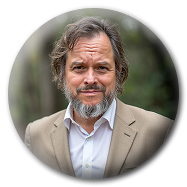
Kent Dahlgren is a systems builder whose career has consistently connected technology, infrastructure, and community development. From grassroots civic initiatives to global technology platforms, he has spent nearly four decades translating ambitious ideas into durable, secure, and executable systems.
A U.S. Air Force veteran and former Combat Communications Operator, Kent established his foundation in securing critical infrastructure before moving into senior leadership roles at Fortune 1000 companies, including Tektronix and Xerox. He has since led large-scale product development initiatives supporting technologies used by billions of people and processing tens of billions of transactions.
Parallel to his corporate leadership, Kent has developed practical models of local governance and community-scale commerce. As a founding member of the City of Portland’s Skatepark Planning and Advisory Team, he helped shape what became the first municipal skatepark system in the United States. He later founded and led the nonprofit Skaters for Public Skateparks, partnering with the Tony Hawk Foundation and the International Association of Skateboard Companies to publish The Public Skatepark Development Guide. His community work has also included launching farmers markets and economic initiatives designed to strengthen local participation, commerce, and resilience.
As Chief Technology Officer of an Amsterdam-based firm, Kent helped develop digital self-governance tools for stateless and refugee communities. This work received UNESCO recognition in 2017 for its support of Syrian refugees and reinforced his belief that thoughtfully designed systems can provide stability, agency, and opportunity for communities navigating complex circumstances.
Today, as Chief Operating Officer and Chief Technology Officer of Terra Global Developments and architect of the HALO Community framework, Kent applies that same systems-based discipline to integrated community development. He helps align housing, infrastructure, technology, services, resilience, and economic opportunity into practical models built for long-term performance. His work reflects a principle that has guided him for decades: communities thrive when their systems are durable, secure, and executable.